 Zach Bryan Profile
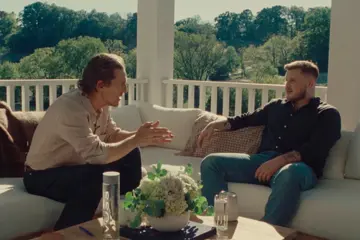
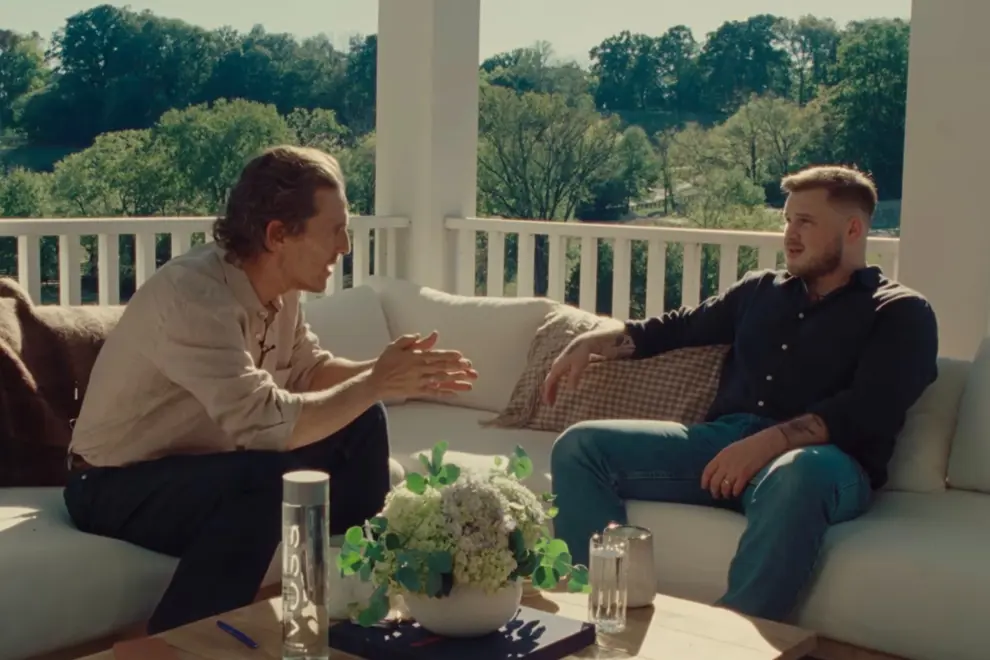
Zach Bryan has dropped an epic two-hour interview with Matthew McConaughey, taking him deep inside his life and his new EP Young Manhood and Other Donatable Organs. During the interview, Bryan discusses his relationship with alcohol, writing, the media and more. He details why he’s telling his story in his own words, so to honour that, here are 12 take aways from the interview in his own words.
1. Zach Bryan on His Creative Process:
“I just feel so blessed 'cause I can be creative whenever I want. Usually people like that in my life who are like, I mean, 'How do you do it? Did you type it? Did you use a pencil? Did you...' All this bullshit around it, the technicalities, I'm like, the best writers I've ever heard of were the ones who were sporadic and off the cuff. My phone's a nightmare because Samantha saved my life; before, I had like 10,000 videos. I would video myself singing, yeah, just to save a melody or save a thing, and there were just 10,000 of them. And I was preparing to write this EP, and Samantha was like, 'You know what'd make this easier?' And she went in and she labelled it: '2024 Music,' '2025 Music,' '2026 Music.' And now I just record myself singing, and then I'll put it in the '2027 Music' or whatever, and it makes life easier.
I think anything good enough, you'll remember it, right? Like if you make a note—if you make a note and you're sitting in traffic, and two weeks later, you'll be like, 'Oh, I remember, what was that?' And I know it's in my phone somewhere. So when I dig, I know that I'm digging for something [that’s worth it]. But that's arguable, because then again, another record of mine, I would have been looking for ideas and I would go through these videos, and I'd be like, 'How did I miss this?' And it's a song like, uh, it's a hit, yeah, and it's just a nightmare being a writer of any sort. I'm trying to get to a place in life now where I can write things that are only good on paper. That's why I've always respected authors so much, because they don't have anything to lean on. There's no drums, there's no guitars, there's no whistles, there's no play, there's no screenplay. They're writing on a piece of paper.”
2. Zach Bryan on Writing Music for ‘The Masses’ and the Nashville Scene:
“See, I've always had a chip on my shoulder my entire life. I've always thought, whether that was like anger or grief, country radio, or I've always been fucking so mad at something. I'm not really sure why. But when I started making music in New York and recording music in New York, I thought I was a part of this tribe: we're doing things differently. And I really enjoyed that for a while, and I thought that I was onto something because you hear some of these songs and you're like, 'That was written by how many people? What does that even mean? Why is that popular?' And then you listen to it and it's got like a trap beat on it, or it has something catchy to it, or it has a nice guitar line, which 20 people in a studio came up with synthetically. And they're like, 'This will be great for the masses.'
And I always was disgusted by that, 'cause I've always been like a Van Zandt fan, or a Foley fan. I used to get texts from people in Nashville that I was friends with that were like, 'Man, you're a purist.' As in a songwriting purist. And I was like, 'What the fuck does that even mean?' Like, shouldn't all songwriters be purists, and I don't mean to sound pretentious, I really mean that. Shouldn't we all be writing our own feelings? But then, I talked to Jason Isbell, and I talked to Wallen sometimes, and I talk to all these people, and I realised the chip on my shoulder was mine. Of course, there's like really synthetic, terrible, fraudulent parts of Nashville, but there's also really cool and beautiful parts of the city too. And this is what changed my mind, I'll tell you what.
I came to visit my buddy, and I was here for like three weeks, and I was running around, I was looking at all these people working on the side of the road, and I saw all these tradesmen, carpenters, plumbers, and I was like, 'Wow, these people are still working out here.' I just really respected that, and I saw all the land, and I gave the people a chance, and everyone was actually kind. It wasn't like a backhanded kindness, it wasn't a judgemental kindness. It was like a real kindness where I broke down with Samantha a few times on the side of the road, and this is a cliché, but people, they helped me. And, I don't know, I feel safe here because the people around here are really just resourceful and tough and really, really sweet. And then, I was recording my EP recently, this really sold me.
I was recording my EP recently, and I was recording this song called Lies with Lana Del Rey. We're sitting in this studio on Music Row in Nashville, which I already felt like a fraud for doing. I felt like a liar, because my whole life I'd been like, 'Man, this city is fucking… no one knows nothing,' you know? Like a pompous asshole. And then I was sitting there at Easy Eye in Nashville, and I was sitting there with Lana Del Rey, Caleb Followill from Kings of Leon texted me while I'm there with Lana, and he goes, 'Hey, we're playing at the Basement East tonight, you want to come perform with us?' And I looked at my phone with one of my idols sitting in front of me on my phone, and I was like, 'Well, no other city could this happen.'”
3. Zach Bryan on Writing His Book:
“I learned this the hard way. I think growing up, especially the last five years, I think if you don't tell your own story, 1,000 people will tell it for you: usually incorrectly. I was sitting there one night after I'd written like 20 pages. I felt like if I wrote something down, it would last forever. I could share it with my wife one day, I could share it with my kids. My kids were a big inspiration. My future children. Not because it needs to live forever, not because I think people give a shit, but because I wanted, maybe if I'm lucky enough to make it to 80 years old, to read it. And I wrote it, and I showed all my friends, and they're like, 'Man, I didn't know half of this about you.' And I thought it was important to share my story before those 1,000 incorrect stories became my story. Because I don't know, they don't even have my damn birthplace right on the internet, let alone my entire story.
I learn new things about myself every day on the internet that are very formidable things. And I thought a good way to settle that was to write my own story: good, bad, and ugly, like no bullshit, no frills. I'm not going to make myself look better or worse, I just needed to know who I was, and I think writing that let me do that. Because I had forgotten a lot of that, and writing it down, something about the pencil made it pop into my head. And then that made me remember the next moment that happened then, and the next, and I was calling my friends while writing this story, and I was like, 'Man, do you remember this?' And they were like, 'No, I don't.' And it was really a sweet thing for me to do, and it felt good. And then I had 250 pages, and I was like, 'Well, I got to do something with this.'
Samantha read it, she's like, 'This is really special.' I read it to her and I was weeping at times. I think she saw me for who I really was in that, you know? And if she could see me for who I really was in that, I think a million people might, 100 people might: whoever picks up the book. I wanted to write it all down so I could put a pin in it in my life and move forward with closure, move forward with my chest high, move forward into like having babies, you know? And you can say whatever you want, you can try to pull it, you can try to push it, but this is who I am.”
4. Zach Bryan on Tapping Out of Social Media & Interviews:
“I think being in my position, it's—hey, you get a haircut? I think being in my position, every single thing said about you, or every single thing that people believe about you, it's almost impossible to respond, because if you respond, it gives someone more attention, it gives someone more [ammunition]. Like three, four, five months ago when I deleted my Instagram, there was a day where I woke up and I looked at my phone and I said, 'I've had enough. I'm done.' This happened when I was about to play in Mississippi and I woke up to just go on a run and there was some kid outside my door with a phone like this, and I looked at him and I yelled a joke, it was a skit from like an internet personality guy, you know?
And then one of my managers calls me and goes, 'Hey, [censored] is going to write an article about how much you disrespect and mistreat the people who listen to your music.' And I just had enough. I was like, 'Are you kidding me? A thousand efforts, a thousand labours of love out the window.' Didn't matter because I said that one thing, and it really broke me because I love the people who listen to my music more than anything on the planet, and to see that I disrespected anyone, or people felt disrespected by me, really upset me. I don't know what happened, but I just deleted everything and I was like, 'I'm done, man. I can't say a word.'
It pushed me over, 'cause that felt personal. About these people who have ridden for me, man. Like the people who listen to my music have given me my life, have given me my love for music, have given me every single show, have given me everything that I am. And I've had fucking people come up to me all the time like, 'You don't know your demographic. You don't understand who people...' Fuck that. I know exactly who listens to my music. I know exactly who I sing to. I know exactly why I sing music or play music and I love each and every one of those people. Every kid at my shows singing Motorcycle Drive By, every freaking family that's at my show, every single college kid that's there with his buddies and wrapped arms. I see every single one of them when I'm singing and I look at them and I get emotional and I think about how much I love them for being there. And to hear that article was going to come out broke me. I didn't hide, I didn't do anything, I was just like, 'Man, I can't win with this. I'm never going to win with this. It's a fight I can't win.'”
5. How Zach Bryan’s EP ‘Young Manhood and Other Donatable Organs’ Got Its Title:
“It was more of a coming-of-age title for me. I said it one day because when I was 19, I was about to go on this deployment. I was about to go to the Middle East and my sister called me, and this was the beginning of my young manhood, I was like 19, you know? My sister calls me and she says, 'Hey, Mom, Mom passed out. She's in the hospital.' And so I drove four hours from Nebraska, and I ended up in this waiting room in this hospital, and I ended up staying there for two weeks 'cause she had fallen into a coma. It was supposed to just be like she fell over, she fainted, she's back up, 'Oh, Mom's back.'
But it turned into like her brain was dead. So for two weeks I waited there with my mother in her hospital room, and there was still hope, you know? There was still hope for her. People thought she was going to come out of it and things like that. And two weeks go by and I remember laying there in a cot in a waiting room in Tulsa, Oklahoma, and no one was there, everyone had left and it was just me. And it was this white synthetic, bowl-like room, and this doctor runs through it and yells, 'Code blue, code blue.' I didn't know what that meant, I thought, I mean, they should have had a better word like code death or she's dying, but it was code blue and I didn't know what it meant. And then 10 minutes later this doctor comes out and he's like, 'Yeah, I'm sorry to inform you that we're going to have to like move on from thinking she's going to make it out of this. You guys have to make a decision.' And I was the only one there. And I had to make the decision. My sister was too emotional, my father wasn't there, like no one was really there. And while I was holding her hand as she was taking her last breaths, this guy who couldn't have been 30 years old walks in and he goes, 'Hey, can you sign these papers?' And I didn't know what they were, I'm like, 'What are these?' He's like, 'Can she donate her organs? You know?'
And my whole 20 to 30 years old I spent just trying to reconcile that, even when you're at your lowest moment, even when you're dying, people are going to come and they're going to ask, and they're going to need. And I've tried my best, I've given my heart and my soul, my lungs, so have you, you've probably given everything you have to every last role you've ever played, and I just had to reconcile that through my entire 20s, like, man, they're going to come and they're going to ask, and they're not going to stop until you're literally in the ground, you know? And I finally one day woke up and was like, 'That's a good title.' 'Cause I feel like my entire 20s I've spent just giving all this shit to other people, you know? And I came to grips with they're never going to stop asking, and I'm not complaining, I'm blessed, I'm blessed, I'm a lucky man. I get to live here, I get to be here, and I get to sing music for a living, but that came from a lot of fucking donation of my heart, and donation of my lungs, and donation of my hands, and my sanity at times.
And like that's why that title means so much to me, it's why I titled the book that, because I looked at that title and I saw that fucking guy looking at me, and I was like, 'Damn, that guy's a metaphor for everything, for every person you're acting for, for every person I'm singing for, they're going to come and they're going to ask.' So I don't know, maybe it's not a fucking metaphor for anyone else, but it meant a lot to me to call it that, and it meant a lot to me at this point in my life as I've come to grips with whatever that felt like, and I feel stronger now after putting that on paper, you know? It's like, okay, I can deal with this now that I've put it out there into the world.”
6. How Kerouac and Hemingway Influenced Zach Bryan’s Approach To Sobriety:
“For a long time, I ignored the fact that Kerouac died at 50, 52 from drinking, and I paid attention to the fact that he was awesome when he was 25. For a long time, I ignored the fact that Hemingway died with a shotgun in his mouth alone, and I loved the fact that he was in Paris in the '30s. And I think that narrative has driven me to a lot of places. I drank a lot in lieu of Kerouac, I drank a lot in lieu of Hemingway, and Samantha and I met, I was like, man, they did it, good enough for me, they were artists, I can be an artist, and it was stupid.
But I often wonder when he had that shotgun with him and he was in that room all alone if it was worth it, if he wanted it, all those words, all those relationships, all those nights. When Kerouac was drinking his last drink, I wonder if he was like, man, I wish I could write more, if only I had a little more time. And when I sobered up, that was kind of where I was at mentally, you know? Imagine what Kerouac could have written if he had 50 more years. It's like, why get that far? And yeah, yeah, yeah, that's a writer's death I guess, but it's not a writer's death I want to have. That sounds like fucking misery. And it's funny, Kerouac has a line, I don't know where it is, but he always says, 'It all ends in agony anyways.' And I wondered if he wouldn't have said that or thought that if his wife would have been like, 'Great! You already wrote On the Road, man, like go settle down, it's okay.' That's why they mean so much to me.”
7. Zach Bryan On How He Got Sober:
“So one night I was drinking at the Grizzly, at this bar in the West Village, and I was like, 'I'm leaving tomorrow. I'm Kerouacking or whatever, I'm leaving tomorrow.' And I wake up, get on my motorcycle, and I stayed at all these national parks. In 30 days, I was like on the road, you know? Running by all these towns and stopping at all these places, I was eating lunch with veterans and skydiving out of planes that were built in the '60s, I was like, fuck it, it's going to be great. I was stopping at all these bars and drinking myself to sleep. Waking up every morning like, damn, getting on my motorcycle, thinking I was on some sort of soul journey, and then finally I go from Manhattan to LA, then I get on the 1 and I eventually get to Seattle.
And through all this beautiful scenery, all these nights, all these bars I'd been to, all the shit that I'd done, I was at this Pilot truck stop right outside of Seattle. And I'll never forget this as long as I live, I'm sitting on this curb, and I go into this Pilot and I grab a 40 Budweiser, and I'm sitting on the curb with my motorcycle in front of me, and I'm drinking it, and I'm thinking, 'What the hell was all that worth? Why'd I do any of that? I feel emptier than when I left. I got nowhere to go home to.' What did I have? Nowhere. I was sitting there, no one to call. Like what was I after? I just wasted 30 days of my life trying to chase this big moment, this big romantic movie moment where like the fucking music starts to play and I'm at the top of the mountain, and it was just me in a fucking truck stop parking lot, and that's when I said, 'Man, why am I drinking right now? What am I celebrating?' And I don't know, that's when I kind of looked in the mirror.
I was never the sober type either, I hate that stuff. I just always thought sobriety was a joke because it's people who couldn't control themselves celebrating not being able to control themselves, and when I was drinking a lot, I always thought like, why can't you control yourself? I never realised I had a problem. And when I sobered up, started drinking fake beers and stuff, I was like, 'Man, this sucks. This is not what Hemingway or Kerouac would have done. What am I doing?' But then the more time went on, I started to realise what that was: I stopped having these like parking lot 40s and like fucking these moments where I was like, 'What the fuck's the point?' I started feeling like there was a point again. I realised I was happier that way. And it changed me a lot, that parking lot.”
8. Zach Bryan On His Panic Disorder:
“When this started, I didn't believe in any of it. My sister always struggled a little bit with anxiety and depression, and I was always like, 'Tighten your bootstraps, let's go, get up, you're fine.' But I'll say when I got in the throes of drinking fucking 15 beers a day, and I kept going with that cycle, I started getting these really, really severe panic attacks where like my whole body went numb and I thought I was going to have a stroke and die, curl up for like days at a time. I told the doctor, 'Man, I'm just hungover, I'm fine.' And the doctor was like, 'No, man, you have a really severe thing going on here.' He asked me about my mother, and I told him about my mother, he's like, 'Shit.' And he was like, 'You don't have any of that, but I think you have a pretty bad panic disorder and if you quit drinking it might help you a little bit.'
So I tried it, and I was like, 'Oh, yeah!' I used to get on stage and I used to think this was the perfect routine, no show could ever go bad if I did this: work out, shower, play my guitar, listen to Bon Iver, drink four beers. Eased my pain, eased all the stage fright I had. It was gone after I drank three or four beers, and I'm like, 'I can do it.' Then I would drink after the show, too, and I'd wake up the next day with another show, like, 'Well, to get rid of this panic in me, to get rid of this stage fright, there's one choice.' Let's do what we've always done and drink two or three more beers, and I thought I was never going to get out of that. I thought that cycle was forever. I was fine.
My managers and stuff, they would always be like, 'Have you tried not drinking before a show?' Like, 'I can't, it's my routine, it's fucking, it's my lucky socks.' For a long time, I danced with that, years I danced with that, and it worked, you know? I was playing a good show, I was paying my bills, I was doing everything, I employed 100, 200 people, it's like this is fine. I will say now that I quit drinking, stages are more scary, but once I get on stage, it's a lot more enjoyable.”
9. Zach Bryan on His Mother:
“She had sobered up finally after all these years and that's when God came for her, which has always haunted me a little bit. It was interesting, 'cause after all this time, all these sins she had committed, she finally was on the straight and narrow, completely sober. Then she stood up, passed out one day, never woke up.
I don't think my mother was sober enough at any point in time to think that she needed forgiveness, you know? Until she had sobered up was when she realised that she had really messed up a few times. See, when I was young, from the time I was 1 to 7, my mom was the best mom in the world: super mom at school, kindhearted, loving, taught me how to be funny, taught me how to match my clothes, taught me all the manners that we need. And I remember specifically when my father started going out to sea a lot more, he'd be gone 9, 10 months at a time and I think my mother, the homecoming queen, realised he wasn't ever going to come home. And she started to resent that. I think she started to resent my Dad for that a little bit, and started to resent the kids she made from that.
And then somewhere throughout there, her friends would always invite her out to these parties out in town. The Navy moms would always get together and drink and have a good time, and those parties turned into solo drinks on like Tuesday afternoon. And it would be me coming in from school and her saying, 'Give me a beer,' and I'd go get her a beer, and then, 'Give me another beer,' and go get me another beer. Eventually, those beers would turn into her not recollecting anything and becoming a whole different person. And this all happened when I was like 8 or 9, so it was very confusing. Going from a perfect mother to this person I didn't even recognise. My whole life, I tried to separate those two people, and I realised that the only way I could forgive her was to know that it wasn't her, it's this addiction that she had.
And I don't think people know this, because I really respect my mother, and I think she's a kind woman. I named an album after her, and I talk about her with a lot of grandiose and love in these songs, when in reality, for a few years, she was like an evil person. I was severely abused, you know, beaten, broken noses, broken arms, broken everything. And no one knows any of this. My sister's never told these stories, I've never told these stories, and I thought in our adulthood, it was about time, you know? Even personally, I needed an explanation. And I wrote it, and I got my explanation by writing it. And honestly, even after she's gone, she's been gone for fucking 7 years now, I still forgave her even more.”
10. Zach Bryan on His First Hit:
“People get this wrong a lot, 'cause I was posting videos to Twitter for like 2 years before anything went viral or anything. I put this song called Condemned on Twitter, and I woke up the next day, and it had like 50,000 retweets. A few days go by, I'm like, 'Man, I got to strike while the iron's hot.' Then I throw another song on there called Letting Someone Go. That week is when my supervisor, Alba, was like, 'We got to go record these songs.' So I go record them, we make DeAnn in that Airbnb. A month later is when I recorded Heading South, and then that was on YouTube, and it got way upvoted on Reddit.
But Heading South was kind of an afterthought. That's why it wasn't on my first album or anything. And people think Heading South was the big moment, but there was like 2 months prior when it was all those other songs that did it. I don't know why people think the Heading South thing was what did it. It definitely probably became the biggest song I had starting out, but it wasn't the first. I had a lot of people listening to my music before Heading South came out.”
11. Zach Bryan On Leaving The Navy After Going Viral:
“I go into work, and I have Vasquez, Alba, Reese, Dismuke, all these people I work with, and Reese is saying shit like, 'Man, you're famous now. You're going to buy us all a car. You're crazy. Virals.' And I'm like, 'I don't know what you're talking about, relax.' My chief is coming to me like, 'You going to get out of the Navy? I got 5 more years on my contract. I'm not getting out of the Navy.' And I wasn't interested in getting out of the Navy, but then it got a little dangerous, 'cause I'd be out on base, and people were crawling in my car, and trying to get an autograph from me and things, and it got a little dicey there for a second. I was in uniform, playing music and stuff, and the Navy, I think, was like, 'This is kind of a problem.'
And so I transferred over to this thing called weapons which is on Whidbey Island, and my gunner at the time, he was like, 'I think I can do this. I think I can get you out of the Navy.' And I'm like, 'I don't want to get out of the Navy. I like it here. I like being in the Navy. This is awesome. I want to be a master chief. I got to drink a bottle of whiskey with my dad one day.' And he's like, 'I got bad news, Bryan, you got to get out of the Navy.' And I was like, 'Okay.' So he put the paperwork in, and he looks at me and he goes, 'Okay, give it a week's time, you'll be out. A week's time.'
So every day, every day, I'm going to work, I'm working my ass off, I'm training up, I'm getting everything, I'm dotting all my I's, I'm crossing all my T's, every day I'm at work early, and I was staying until late, 'cause I'm like, 'If this is my last day in the Navy, I'm going to really do this.' A month goes by. I'm like, 'Hey, gunner, when's that paperwork going to—' He's like, 'Soon, give it a month.' I give it a month. Every single day, I'm still at it, giving it all I can. I go out, and I buy this apartment two hours away from base, takes a boat to get to and from work, 'cause I'm like, 'Oh, yeah, in a week, it's all good, I can do it.'
Another month goes by. I'm taking a boat to work every day, takes two and a half hours to get to my job every morning. I'm waking up at 4:00 in the morning, going to sleep at fucking midnight. The whole time, I'm travelling to work, working my ass off, travelling home. Another month goes by, I'm like, 'Okay, this is getting to be a lot.' Going into work barely alive, I start drinking pretty heavily at this point, 'cause I think I'm free.
I'm like, 'I'm free from everything, I'm good.' Warner Records is there, I'm already signed to them, that's a crazy story, too. But I'm still in the Navy as all this is happening. I'm trying to make music, I'm still posting music, I'm still making YouTube videos, but all the while, I'm commuting two and a half hours to work, working fucking 10 hours, commuting two and a half hours back. Some mornings, I wake up, there's like a hurricane, I can't even get to work, 'cause the boat's not running, so I got to go all the way around the peninsula, takes like six and a half hours. So I was waking up at 1:00 in the morning every night to make sure that ferry was on.
Then finally, eight months went by at this point, I get a call from one of my managers, and he says, 'Hey, I have this show out in Houston, Texas, some rich lawyers want you to play for them for a birthday or something.' And I would have never accepted that, but the money they were offering was more money than I had seen in my entire life. I'd never seen more than $1,000 probably. 'We're going to be rich, we got to go.' So I have to put in leave two weeks prior for the weekend to Houston, Texas, to play this show. It was somewhere north of like 10,000 bucks, you know? And I was just so excited.
So I go, and it's like all these rich, yuppie lawyers, it's like someone's birthday, waiting for me to play, and I feel awkward in this big, massive mansion, and there's these people next to me named Chris and Kelly, still my best friends to this day, I never met them before. And Chris, the lawyer's son, was like, 'Hey, I'm the one who told my Daddy he should book you.' So I get to know him, and I play this show for all these like rich lawyers in Houston, Texas, and I'm like screaming Condemned in like a living room, and I still pretty much sound like shit at this point. So I get done, and all these guys are like, 'Hey, you know any George Strait covers? Can you play some Conway Twitty for—' and I'm like, 'Who the fuck are those guys? Come on, I just played God Speed for you.'
And afterwards, Chris and Kelly are like, 'Hey, we're going to go party, we're going to go to the clubs of Houston.' And I got a Saturday night off from the Navy, I'm like, 'Hell, yeah, let's go.' So we're drinking a bunch, and we get to this club, and it's a very weird, downtown club in Houston. I got no idea where I am. And there's a girl here, there's a girl here, there's Chris and Kelly here. The next morning, I'm texting back and forth with her. I don't know if my story's right, it might have been her friend, but one of their fathers was the admiral of the Navy, and I was waiting on this paperwork to go through. And so I'm texting someone, and I'm like, 'You guys know this guy?' Two days later, I get a call, 'Pack your bags, Bryan, you're going home.' All because I got hammer drunk in this bar in Houston, Texas.
And when this moment happened, I collapsed, 'cause I'd been working my ass off so hard for like eight months. And I looked up, and I was like, 'Thanks, Mom.' And I got up, went to get my backpack, got in my truck, and I was sitting there in the parking lot, and then I realised there was nowhere to go. Where do I go from here? 'Cause all I had known was the Navy for seven and a half, eight years, all I had known was the Navy. And I was still in my uniform, and I went home, and it was like nothing. I went to my apartment, took my uniform off for the last time.”
12. Zach Bryan On His First Royalty Cheque:
“I didn't know you can make money making music ever. So when I released DeAnn, I just kind of released it into the world, and DeAnn was everywhere, I was like, 'Okay, cool, that's an album.' And it's out, like a year and a half later, I realised if you go to your TuneCore, you can see what your royalties are from all your music. So I'd never seen more than $1,000 in my life, truly.
I opened my TuneCore account, and I was like— you're seeing 'are those commas in the right places'? I said, 'Oh, my god.' I couldn't believe it. I remember I cried. I think he was around, Austin, one of my best friends, like he was upstairs. This changes everything. And I was like, 'What do I do with the rest of it?'
And I thought about opening up like a DeAnn's Hope House, 'cause I remember being in like seventh grade and sitting at the bus stop and crying just thinking about my mother being there all alone, and her suffering through the throes of addiction, and no one cared about her. She didn't have a job, she didn't have custody of us, she had nothing, and there was no one there to help her. Like, man, I never want to see anyone ever suffer like that again. So I started back then to open up a bunch of houses that would take care of women who had children they couldn't really take care of themselves. Women who were trapped in abuse or addiction, where nobody was looking out for them, and they had nowhere to go with their kids.
Because looking back at my mom, all I could think was, if someone had just given her a safe place to lay her head and get clean, maybe she wouldn't have slipped away like that. So taking that money from DeAnn and putting it toward something real—giving someone a roof and a second chance—that was the only thing that made sense. It wasn't my money; it felt like her money.”