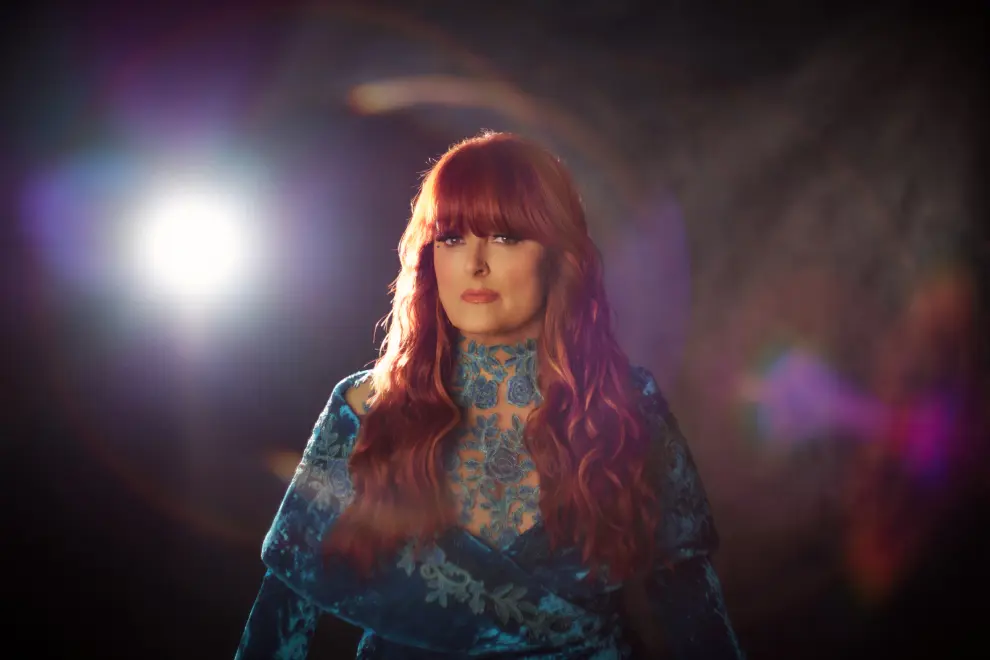
For over four decades, Wynonna Judd’s voice has stood as one of the most identifiable instruments in American music.
Yet on her upcoming solo album, The Hard Truth, there is an undeniable shift in what we have heard before. Released today, the GRAMMY Award-winning artist’s first album in ten years strips away the production value that defined her early records, delivering a record that is bare, deeply personal, and unfiltered.
The ten-track collection features her latest single, Girl Who Could Sing, which was written by Judd alongside her husband, Cactus Mose, plus Clara Calaway, Melissa Forrette, and Brant Colella. The track explores a raw and recent event in Judd’s life: a letter to her late biological father, whom she never knew and never had the chance to meet.
"I was 30 years old when I learned the truth: that the man I called ‘Dad’ my entire life was not my biological father," Judd previously explained.
"It changed everything I thought I knew about who I was. By the time I was ready to meet him, he was gone. I never got to hear his voice, look him in the eyes, or ask him why. I’ll carry those unanswered questions with me for the rest of my life."
Judd told Countrytown, “After my daddy died, I went on a journey of figuring out who he was and just what the story is. And it came when a cousin called me and told me that when they found my daddy, they found a drawer full of clippings about me.”
When she shared the news with her husband and long-time collaborator, Cactus Mose, he immediately recognised the weight of the moment. “When I told my husband Cactus, who co-wrote and produced the record... he said, 'That's a song,’” she says.
“And so, it didn't take very long. It pretty much wrote itself, but it was a journey for sure. I feel like I've waited my whole life to be where I am right now with these songs. It's taken my experience, wisdom, strength and vulnerability to write this record.”
In the track’s official music video, Judd can be seen holding the exact press clippings her father kept hidden away in that drawer. Throughout the lyrics, she laments the uncertainties, asking questions that will forever go unanswered: “Did you hear the same lies that kept us away?” and “Did my voice and my backbone both come from you?” She wonders, “Did you ever buy a ticket, did you come to a show?”
The track's lyrics are memorable: “Was I ever really your daughter, or just a girl who could sing?” But Judd has learned to channel this heartbreak into her craft. “What do you do with the questions you’ll never have answers to? My answer is simple… I sing about it.”
Talking about that choice, Judd explains how music has always served as her primary mechanism for processing trauma.
“It saved my life. 99% of my brain is lyrics,” she says. “And I pretty much speak in lyrics in a sense, because they've saved me from depression and just all the stuff I've gone through; grieving my mother's death. And I have a way of writing things down like everybody else, like in a journal or whatever, and they turn into songs.”
The Hard Truth marks a monumental milestone in Judd’s legendary career: it features her very first album co-writes.
The record is divided into two distinct thematic parts; the first portion delves into Judd’s bittersweet, complex relationship with her late mother, Naomi Judd, exploring the feeling of remaining locked outside a life of her own, even while standing under the global spotlight. The second half shifts toward redemption and agency, focusing on the independent life and identity Judd has painstakingly built for herself.
Stepping into the role of co-writer was an essential act of self-advocacy and seems to be something that was necessary for her to deal with this complex subject matter.
“Because I spoke up for myself and asked for credit, as a woman in the business, I've always kind of looked to everybody else for the answer,” Judd says. “And the answers are so real to me now that I just said, 'I really want to be a part of this, and I want it to come from me. I want to be believable, and I want to be transparent, and I want to give my testimony.'”
It hasn’t been easy, though; despite working with her husband on their farm, she still found the process uncomfortable at times. Judd explains, “[It’s] devastating on one day and liberating on the next. I am broken and blessed at the same time; that's why I wrote that song. And I'm ready to be so honest that I don't have to carry this stuff anymore; I can give it away and let it go.”
Behind the scenes, Mose played a pivotal role in maintaining the album’s raw, organic atmosphere.
Mose previously said, "Being a part of this record and helping bring these songs to life as its producer has been the most important work I've known. We started with nothing but a feeling and emotion and ended up with an entire album that captures Wynonna’s story with a level of honesty she's never experienced in her career."
Recording in their farm studio outside Nashville, the couple intentionally threw out modern production in favour of live emotion. “It's like getting naked in church,” Judd says. “I just wanted to keep it simple and raw, and I wanted it to be as real as possible, so we figured out a way to do that.”
That commitment to authenticity guided every vocal decision. Recalling a moment in the studio recording Girl Who Could Sing, Judd details Mose’s protective instinct.
“The very first line says, 'I didn't know my daddy, I think he was proud.' And then at the end of the song, I sing it again... And it goes down,” she recalls. “And I said I want to do that again, and he said, 'Nope,' because I was crying, and he said he wanted the lyrics to represent the emotion. I think he's right in that moment.”
The Hard Truth was released today, and then Judd is taking these healing songs on the road. Following her performance at AmericanaFest in Nashville, she is returning to her home state of Kentucky for four emotional shows, including two nights at the Paramount Theatre in her hometown of Ashland, before kicking off a nationwide tour in New York City on October 8.
Heading back to Ashland with this album carries a heavy weight. Judd muses, “Ah, it's going to be so bittersweet. All my people are gone, except for cousins. And I will be standing there as the queen in my small town where I used to walk to all the stores... Oh, it's going to be so celebratory, I can't even believe it.”
For Judd, The Hard Truth is not an exercise in grief, but a testament to survival.
“I'm not a victim, I'm not a victim. And I don't have to be a victim with this record. I feel like I gave it with love... I just want it to be a celebration, as well as a reminder of where we come from, but not to stay stuck there. And so I plan on doing as much work as possible to move forward and look into the light.”
Wynonna Judd’s The Hard Truth is out now.