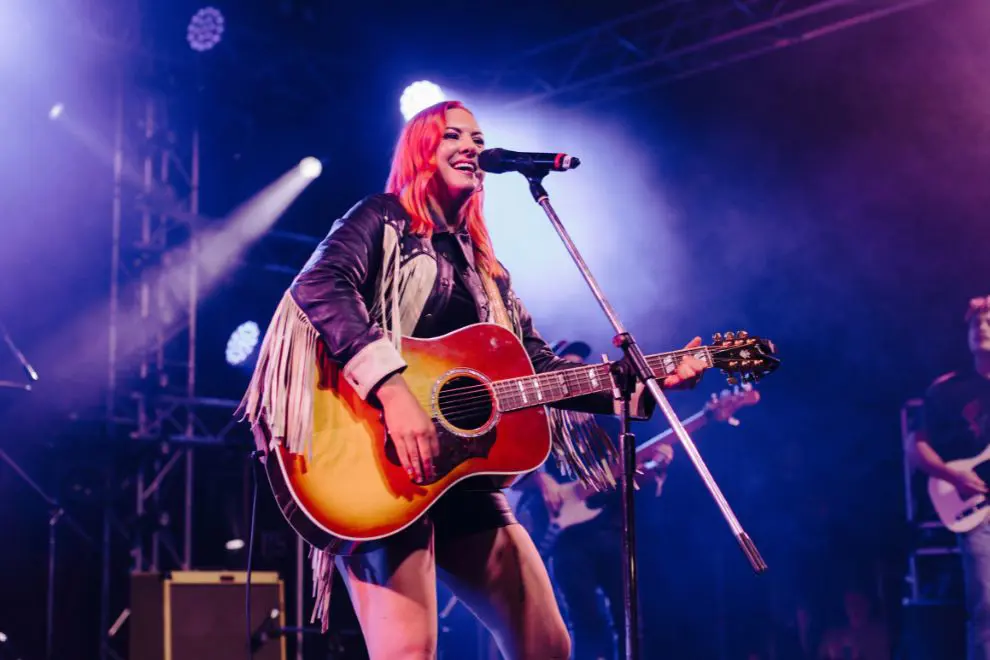
 Taylor Moss Profile
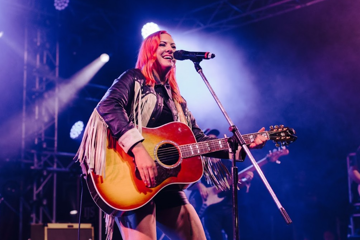
Taylor Moss has written an open letter and contacted her local parliamentarian to discuss her concerns about changes to superannuation laws in Australia.
Superannuation – also known colloquially as “super” – is Australia’s savings system for workplace pensions in retirement. Money earned by an employee is placed into an investment fund, which is made legally available upon their retirement.
On 1 July, new changes came into effect, seeing employers paying superannuation contributions at the same time they pay employees’ wages, rather than at the end of the month.
Taylor Moss has penned an open letter titled: The New Superannuation Changes Are Threatening the Australian Music Industry. Sharing that as an independent country artist, Moss writes, records, and organises tours, she also discussed employing musicians.
“Firstly, I want to make it clear that I support superannuation,” Moss wrote in the letter, which she posted on Instagram on Tuesday (28 July).
She continued, “I have no issue paying superannuation for myself or for the musicians I employ.
“My concern is not with paying superannuation itself. My concern is with how these new obligations have been applied to performers and sole traders, who generally live week by week on their low share of income.
“From my understanding, my booking agent is now required to pay superannuation on my entire performance fee when I perform at a festival, event, or venue.
“Superannuation = personal labour. The problem is, that fee is my personal labour or income.”
Moss added that a live performance fee represents “the operation of an entire small business,” which covers the costs required to deliver live performances, such as agent commissions, management commission, travel, and musician wages, all of which take up portions of the performance fee.
In an example, Moss posted: if a festival pays an independent artist a $10,000 performance fee, 12% superannuation will be calculated on that fee, “creating an additional $1,200 superannuation obligation to the sole trader.”
That means that the $10,000 performance fee – which isn’t an artist’s wage – looks like this after costs are paid:
Gross performance fee: $10,000
Management commission (20%): -$2,000
Booking agent commission (10%): -$1,000
Flights, accommodation, transport, musicians, equipment hire and production costs:
-$5,200
Remaining business profit before tax: $1,800
The superannuation payment is then drawn out of the business profit.
“The legislation appears to treat the entire performance fee as the artist's wage, when in reality most of that money is used to cover the costs of running the business (Including paying my session musicians their superannuation),” Moss wrote.
Her open letter continued, “The reality is that sometimes I make a profit, sometimes I break even, and sometimes I walk away with nothing after paying everyone else and covering my expenses. That's the harsh reality of this industry.
“Calculating superannuation on the entire performance fee, rather than the portion that's actually my income, simply doesn't reflect how independent artists operate.”
She added, “Another consequence of these changes may push many sole traders to restructure their businesses into companies simply to manage these obligations.”
Towards the end of her letter, Moss argued that she doesn’t earn enough from her music business to justify operating as a company. She also stated that the changes would make it even harder to make a living from music. For festivals and some music venues, she doesn’t believe they’ll increase artist budgets, and instead leave it to them to cover additional costs.
“I respectfully ask the Government to reconsider how these obligations apply to sole traders within the performing arts industry,” Moss wrote in the conclusion of her open letter.
“I am not asking to avoid paying superannuation. I am asking for a system that better reflects how our industry actually operates. We're human and not one size fits all.
“I encourage the Government to consult directly with artists, booking agents, venues, promoters and industry organisations. Speak to the people who are actually making it happen.
“Music brings people together. And we need you to protect the future of Australian music, rather than create more barriers for the people working hard to keep it alive.”
Moss’s open letter has received plenty of support from fellow performers, including Carla Geneve, Raechel Whitchurch, Queenie, Zac Weeks, and many others. You can read the full open letter below.