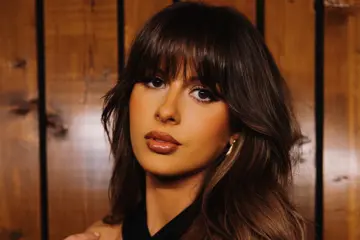
 Tori Forsyth Profile
For a while, it looked like everything was finally falling into place for Tori Forsyth.
Her album All We Have Is Who We Are had elevated her profile to new heights, she’d landed an ARIA nomination, was touring steadily and had started building momentum internationally. After years of grinding it out, it felt like the career she’d always imagined was finally becoming reality.
Then, in late 2024, everything changed.
“It felt like everything was really working for us musically. Doing the Jackson Dean tour and then having plans to go to America and get my first visa. So it was just kind of like we're on the trajectory that I always envisioned for myself. And then in late 2024, my ex and I were rear-ended at 80kms.”
The crash left Forsyth dealing with ongoing physical issues that still impact her daily life now. But mentally and emotionally, the accident became the catalyst for a much bigger reckoning.
Suddenly, the lifestyle she’d spent a decade building no longer felt sustainable.
Forsyth has kept the same core touring band around her for close to 10 years, something she says she’s always been deeply proud of.
“It's interesting because I'm a solo artist at the end of the day. I write all my own songs, and I've had this very lucky position where I've had a band involved in that I'd give them the songs, and then they’d go into the studio and put their own spin on it…. For the most part, it's been a core group of us. And I've really prided myself on keeping those relationships.”
But keeping that machine running came with a financial reality many fans never see.
Forsyth admits she’s spent most of her adult life pouring money back into touring and trying to keep her live show operating at the standard she wanted.
“So over the course of 10 years, that costs a lot of money. Money that I don't always have, and it's like I'm now 30 and I've got a lot of debt from doing it just consecutively over years, and that's my choice, obviously. But it's quite straining”
When the accident happened, the cracks became impossible to ignore and touring had to change. Financially, physically and emotionally, something had to give.
At the same time her personal life was becoming increasingly difficult, a completely unexpected opportunity landed in her inbox: America.
A cold email from JammNation founder Rob Hillier offered to take Forsyth and her band to the US. At first, she thought it might be fake.
“I got a message from Rob, and he has an app called JammNation, and he sent me a cold email just saying, "Hey, I'd love to take your band over to America." And, you know, I'd never heard of this guy before, and turns out he's just this angel who wanted to invest in music that he really liked in Australia and he wanted to cross-pollinate really good American country music and really good Australian country music.”
“He'd reached out to a couple of people, and I'm the only one who was like, "I'll jump on the phone with you."” she laughs. “And we really didn't know it was real until we got to America.”
What followed became one of the most creatively validating experiences of her career. Forsyth says the response she received in places like Kentucky reignited something she’d lost after years of navigating Australia’s industry landscape.
She recalls playing a tiny dive bar early in the trip before returning weeks later to find the venue packed with people who’d come back and had brought friends.
Forsyth says the experience reminded her why she started making music in the first place, “it gave me this hunger that I'd forgotten about.”
Back home, however, she still felt disconnected from parts of the Australian industry, particularly as pop-country trends continue dominating festival lineups.
“There are festivals that do take a punt and put me on their bill, and I love them for that. For instance, the Gympie Music Muster, Groundwater historically has been a real supporter of my music.”
“We still sit sonically outside of what is popular in Australia… I think when people think of my music in the Australian industry, they think of New Wall, cause that was the first song that took off for me. But it's not what I put on a show like these days.”
But she believes too much of the Australian industry is currently “playing it safe” which doesn’t benefit artists or fans.
“We know full well, TikTok is king. And if you're famous on TikTok, then you got a main stage spot, baby.” she laughs.
Forsyth says America felt different “And I think it's cultural… in America they do everything like tenfold. So when they're obsessed, they're obsessed. And they have this thing about them that they're going to be die-hard for something. You see it here in Australia, but it's for sport, or until something pops off overseas.”
But while professionally the US trip was inspiring, personally it became one of the most traumatic periods of her life.
Midway through the tour, her father became critically ill in Nashville after flying over to watch her perform at CMA Fest.
Her dad ended up in the ICU with pneumonia and a shattered spleen, leaving him in a critical condition.
Juggling a relentless touring schedule across America while trying to process what was happening with her father from another state was brutal.
“I think there's something that happens to your brain when you have stacks of traumatic experiences that you're navigating at the same time. And, I'd never experienced it before, but there is-it's very much-when they talk about putting one foot in front of the other, I finally understood what that meant.”
For months, she says survival mode became very literal.
“There's no room for anything else when you're in that mode except for surviving, and literally trying to remember to eat meals and not self-destruct.”
As her father was eventually medically evacuated back to Australia, Forsyth was also dealing with the breakdown of her five-year relationship, her dog’s declining health and eventual passing, and ongoing fallout from the accident.
“Usually working out and moving my body would be a way that I can help cope, that was off the table because I can't do that anymore.”
Despite everything happening around her, Forsyth still went ahead with recording her new album which was something she almost pulled out of entirely.
“So, I nearly didn't record. I called my producer Scott [Horscroft] and I'm like, "Man, I'm, I'm a shell right now, I don't think I can do this." And he was like, "I think you need to do this now." So, I did.”
The process became both emotionally brutal and strangely cathartic. “it kind of carried me through, it was very therapeutic.”
“And I think it's some of the best work that I've done, um but it was not an easy experience… recording's exhausting. It's like, it's not just sitting around fucking around, you've only got a certain amount of time to do it, so the days are long” she added.
Forsyth believes listeners will hear every bit of that emotional weight inside the record itself.
“I think you can feel that when you listen to these songs and this record. You can feel it in the, in the imperfections, the lyrics and the delivery. I think everyone felt the energy of what I was experiencing [when we were recording it] and they were very respectful of it.”
One song in particular, You and Me, still feels especially raw.
“I thought he [Forsyth’s ex] was going to propose in America.” She laughs. “Like, I thought maybe that was on the cards for me, but it was also a difficult thing to grieve when I thought that I was going to have a family, do you know what I mean? Like, I'm at that age now, and kids are something I've always wanted, so I'm also kind of thinking like is that going to be possible? I was grieving a lot of different things at that time.”
At the time of recording the album, Forsyth was touring which exposed her to another difficult reality: the level of harassment women can face in live music spaces.
“It is something I experienced before that tour,”
“Some nights I'd walk out and I wouldn't even get to the microphone before I'd hear someone calling me a slut.”
“Like I was putting my guitar lead into my guitar and I had someone yell out, "Oh yeah, I could stick it in you like that."”
She says it felt like she was hanging by a thread dealing with it at that time in her personal life. The experience definitely highlighted the double standards women still face on stage.
“And it's interesting because at the end of every show, me and the audience were cool. But, it was this weird dance of getting to, to get their respect.”
Now, as Forsyth prepares to release new music, she says she’s intentionally stepping away from the carefully calculated version of herself she’s previously presented publicly.
On her new single Guns and Little Girls, due to drop May 22, Forsyth claims “I think it's one of the best songs on the record.”
“I think it's a beautiful juxtaposition to the last two songs I’ve released… And they're going to be very stark contrasts, but I think it makes a lot of sense if you just sit with it and try to feel it, because it really shows you the human experience of the emotional roller coaster in which I've lived through these last few months. And, it's definitely a sonic representation of that um, and I'm okay with that.”
“I think that the concept of life imitating art and art imitating life is very visceral for me right now. I'm relating more to people who are honest and more transparent and show the parts of themselves that maybe are a little uglier. And I think we're craving that.” she adds.
Part of that honesty includes opening up about unexpectedly falling in love with her best friend, following both of their relationship breakdowns.
“I am extremely trepidatious in the beginning of relationships, period… But yeah, I did. I fell in love with my best friend, eventually.”
Forsyth says she resisted it because of the personal and professional risks involved as he happens to be a prominent part of her music team.
“This is the thing, this is why it's difficult. We were getting accused of it, for years. Um, because we have a really good chemistry. And it's like everyone knew before we did.”
“I was more concerned that it would be irrational, stupid, and am I doing this because it’s right here, convenient?”
These days, though, she feels a growing responsibility to be more emotionally transparent especially in her music even when it’s uncomfortable.
“And I think I feel this like, I feel like a responsibility almost, now to double down on being authentic.”
“I fucking hate the word "authentic" because it's thrown around like confetti.”
“But, um, I do think that there's a real importance to go back to what the true meaning of music and creativity is and that's to be honest.”
That honesty is something she believes audiences are desperately searching for right now and it’s exactly what she hopes people hear in this next chapter.
“I love all the songs, you know, as much as the other. Some are obviously more difficult. I love You and Me. It's a beautiful song. I meant every word, and I still mean every word, it’s just hard now.” she laughs.
“But, it will show you exactly what it means to be human to listen to the these three songs [I’m Not God, You and Me, Guns and Little Girls] back-to-back.”
Looking ahead, Forsyth is already planning another trip back to America, to write more songs and secure herself a more prominent touring schedule over there.
“I just want to keep touring, I miss the road.”
After everything she’s lived through over the past two years, it’s clear the road back hasn’t been easy.
“Once again, making music has saved my life and you hear it in these first three singles, and you will hear it in the rest of the record when it’s released.”
But for the first time in a long time, it sounds like Tori Forsyth is finally letting people see the full messy picture and her desires for the future.
This article mentions trauma. If you or someone you know is affected by these experiences and needs to contact someone, please get in touch with 1800RESPECT on 1800 737 732 or visit 1800RESPECT.org.au.