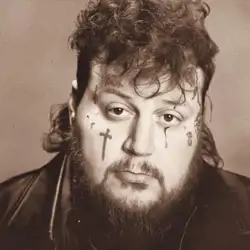
 Jelly Roll Profile
Did Millie Jackson, the Godmother of Rap, pioneer country rap? There are many stylistic and cultural antecedents for the rise of the genre.
In the mid-'60s, Jamaica's Prince Buster released Texas Hold-Up, starting a tradition of reggae country even Shaggy upheld with his dancehall Angel borrowing from Angel Of The Morning – a standard Juice Newton memorably revived in the '80s.
George Clinton's theatrical Parliament spoofed country & western with Little Ole Country Boy on 1970s tripped-out debut album Osmium, adding pedal steel guitar and yodelling (the song incongruously penned by English folkie Ruth Copeland). In the '80s, pre-Baby Got Back, Seattle MC Sir Mix-A-Lot satirised the idiom with Square Dance Rap – yeehaw electro. But Jackson genuinely revered country music.
JUST A LIL' BIT COUNTRY
During the '70s, when music wasn't always stratified, Jackson was one of several R&B/soul legends to venture into country along with The Pointer Sisters, Tina Turner and Bobby Womack.
Born in Thomson, Georgia and growing up in Newark, New Jersey, she broke out as an R&B vocalist but incorporated spoken word into both live and recorded performances – and is now considered 'The Godmother Of Rap'. Jackson was unapologetically bawdy – and unfiltered – with her niche cheater tales.
However, she was also expansive musically. In 1977 Jackson aired a deeply soulful cover of Merle Haggard's If We're Not Back In Love By Monday. Again expressing an affinity with country, she revisited the genre on 1981's album Just A Lil' Bit Country – the hilarious closer Anybody That Don't Like Millie Jackson, a personalised interpretation of Kris Kristofferson's If You Don't Like Hank Williams.
In 2026, country rap is booming. More than a trend, it's recognised as a subgenre, emanating from cultural hybridisation and creative exchange and driven by a heterogeneous international audience that appreciates a spectrum of music. And, yes, inevitably with such a dynamic market, this crossover is strategic for the music industry. Country traditionalists hold less sway.
In fact, Black musicians have been pivotal to country's evolution. In 1927, DeFord Bailey was the earliest Black country icon to play what became known as The Grand Ole Opry – the Nashville, Tennessee institution founded as a weekly barn dance show by the radio station WSM. (Virginia's Pharrell Williams actually appeared at the hallowed venue in 2016, accompanying Nashville vocal group Little Big Town for a rendition of C'mon, which he wrote and produced.)
GRAND OLE OPRY, HERE WE COME
At one time, country rap had an obvious novelty status. Black R&B and hip hop artists exploring country often approached it as an act of subversion or transgression. Even that irreverent gangsta rapper Snoop Dogg – adventurous stylistically from the 2000s onward – latched onto country for My Medicine off Ego Trippin', collaborating with Willie Nelson and Everlast.
He dedicated the song to Johnny Cash ("a real American gangsta") and flexed, "Grand Ole Opry, here we come." But other R&B and hip hop music-makers would experiment seriously with country, disinclined to 'stay in their lane' – and, progressively, reclamation has been the impetus. Inadvertently, these artists have challenged any residual stigma, or classicism, attached to country.
In recent years, too, R&B and hip hop creatives have repudiated the descriptor 'urban contemporary music', originally a radio format in the '70s, as an arbitrary racial euphemism when R&B and especially rap were jointly declared the 'sound of pop' – genre classifications more fluid in the streaming era.
The term 'urban' was largely abandoned by the industry from 2020 as Black Lives Matter gained traction. Yet, in the '90s, Southern hip hoppers highlighted a (geographical) paradox – and synchronicity – between 'urban' and 'country'. A fresh wave of rappers like OutKast disrupted the regional domination of the East and West Coasts in US hip hop and defied Northern prejudice against the South, accentuating their twang and slang and espousing Southern community.
PEOPLE EVERYDAY
Atlanta's Arrested Development, fronted by Todd "Speech" Thomas, heralded country rap spiritually – their hip hop at once Afrocentric, socially-conscious and rustic. The collective's 1992 debut album, 3 Years, 5 Months And 2 Days In The Life Of… was ubiquitous, generating hits like the Prince-sampling Tennessee, People Everyday and Mr Wendal.
Arrested Development were the first hip hop act to win 'Best New Artist' at the Grammy Awards. Alas, they never repeated that LP's success – and singer Dionne Farris split to pursue alternative rock. But they still tour. Symbolically, Arrested Development played the Sydney Festival's opening night in 2011 at the same time as Emmylou Harris.
In the late '90s – and well before Eminem – Detroit's Kid Rock emerged from the Midwest. He established country rap, if not bro-country, with the alt-rock-leaning smash Cowboy off 1998's major label Devil Without A Cause – his fourth album. Rock assumes the persona of a redneck pimp headed "out West" to California, rapping "I ain't straight outta Compton, I'm straight outta the trailer."
Far from disenfranchised, Kid Rock mythologised a white trash background despite being the product of privilege, his father an auto industry leader with a large estate – ironic since hip hop and country alike emphasise authenticity. The self-identified libertarian caused outrage by parading the Confederate flag – a white supremacist symbol – and rallying behind President Donald Trump, losing his Black audience.
Another Republican is Dallas' Cowboy Troy, a Black country rapper who, breaking out with I Play Chicken With The Train (alongside Big & Rich) off 2005's Loco Motive, branded himself 'hick-hop' – provocatively reclaiming an epithet. And so country rap has prompted important debates. In 2013 the liberal Brad Paisley questioned Southern pride in Confederate imagery in his song Accidental Racist, recruiting LL COOL J – although the media discourse centred on its execution rather than the admittedly gauche message.
St Louis' Cornell "Nelly" Haynes Jr put a more grassroots Midwestern spin on country than Kid Rock. Advancing a sing/rap style, his 2000 hit Country Grammar (Hot Shit), from the album of the same title, had a country lilt. For 2004's Suit, Nelly duetted with '90s star Tim McGraw on the heartfelt Over And Over – an Australian #1.
While Nelly lost momentum, he found his way back into the spotlight after blazing a remix of Florida Georgia Line's 2012 mega-hit Cruise – the bro-country duo realising their crossover potential (the track produced by Jason Nevins of It's Like That notoriety). Nelly fully committed to country rap on his 2021 comeback Heartland with choice guests such as Darius Rucker and Kane Brown plus Florida Georgia Line.
Equally credible in the 2000s was Georgia's Bubba Sparxxx – who, heard by Jimmy Iovine, signed to Timbaland's Interscope Records-backed Beat Club imprint and enjoyed accolades with Ugly. The rapper may not have sustained a high-profile following his debut album, Dark Days, Bright Nights, but he'd join Colt Ford's Average Joes Entertainment stable and remains active.
In the mid-2000s, Ford had left his vocation as a professional golfer to become a country rap performer – and, in 2023, cameoed on Australian country rocker Jayne Denham's Moonshine. Timbaland was eventually involved in Justin Timberlake's widely panned 'Americana' excursion, Man Of The Woods.
New Jersey's Wyclef Jean is underrated for his country moves. Jean's supergroup the Fugees referenced country tropes like yodelling in Cowboys, protesting gun violence, on The Score in 1996. But the versatile Haitian-American delved further solo.
On The Carnival, he transformed the classic To All The Girls I've Loved Before (an Albert Hammond number remade in the '80s by Julio Iglesias as an iconic duet with Nelson) and expanded into countrypolitan with the orchestrated epic Gone Till November, proving himself an innate country storyteller.
The 2000 sequel, The Ecleftic: 2 Sides II A Book, saw Jean solicit Kenny Rogers for a freestyle version of his '70s signature The Gambler (alongside Pharoahe Monch) and deliver a second countrypolitan masterpiece in 911, duetting with Mary J Blige.
Country rap has long been male-dominated but, in 2002, Long Island MC Lady May released the cowgirl banger Round Up with Blu Cantrell – the feminist video inspired by the road movie Thelma & Louise. Though now cult, Round Up flopped and Arista Records shelved May's album.
GIT UP
There was a cultural flashpoint when in 2018 Atlanta rapper Lil Nas X unleashed his record-breaking country trap anthem Old Town Road.
He had leased the beat from Dutch producer YoungKio (the banjo sampled from a Nine Inch Nails instrumental) and tagged the song 'country' on SoundCloud. Lil Nas X plugged Old Town Road via TikTok – capitalising on The Yeehaw Agenda, an online celebration of Black Western culture and aesthetics with memes. It went viral.
Old Town Road debuted in the Top 20 of Billboard's Hot Country Songs chart but was then contentiously disqualified for not being legitimately 'country'. Billboard's call led to a wider discussion about establishment gatekeeping as well as the negation of Black progenitors from the country canon and how the industry perpetuates segregation.
Addressing the chart controversy, Lil Nas X told Time, "The song is country trap. It's not one, it's not the other. It's both. It should be on both [charts]."
Lil Nas X signed to Columbia Records and dropped a remix featuring Billy Ray Cyrus – who proclaimed him a fellow "outlaw" on Twitter and would join him for his inaugural live gig with the DJ Diplo at the Californian Stagecoach festival.
An alternative version was bolstered by another Atlantan, Young Thug. Coincidentally, Thug had already presaged country trap with Family Don't Matter (introducing Brit country pop aspirant Millie Go Lightly) off 2017's mixtape Beautiful Thugger Girls – his "singing album". Amid all the media attention, Lil Nas X came out – possibly no surprise given how ingeniously he queered up hyper-masculine stereotypes in rap and country alike with Old Town Road.
Lil Nas X ultimately quit country (trap) post-Rodeo (with Cardi B), from the 7 EP. His first album, MONTERO of 2021, was pure hip-pop. But the star did publish the children's book C Is For Country. (Touring Australia over the summer of 2022/2023, he performed his signature track as a medley with elements of Ginuwine's R&B fave Pony.)
Still, Lil Nas X's success encouraged yet another Atlantan, Blanco Brown, to issue his country trap The Git Up, which likewise achieved virality as he shared a memeable line dance challenge (enlisting Lainey Wilson) and landed at #1 on US Hot Country Songs (it was also an Aussie Top 5 hit). Brown has been lowkey since his late 2019 debut, Honeysuckle & Lightning Bugs, but latterly aired Lasso Boogie – EDM country.
ROUND UP
In 2016, two years prior to Old Town Road, Beyoncé Knowles veered into down-home balladry with Daddy Lessons on her high-concept album Lemonade. She performed it at the 50th Country Music Association Awards (CMAs), Nashville, with The [Dixie] Chicks. Country fans vented on social media – some genre purists, but others exposing the US scene's dormant racism.
Moreover, the National Academy Of Recording Arts & Sciences' country screening committee inexplicably rejected Daddy Lessons for consideration in any country categories at the Grammys. Galvanised by the mixed reactions, Knowles subsequently cut 2024's country 'n' B COWBOY CARTER, winning both 'Album Of The Year' and 'Best Country Album' at the awards.
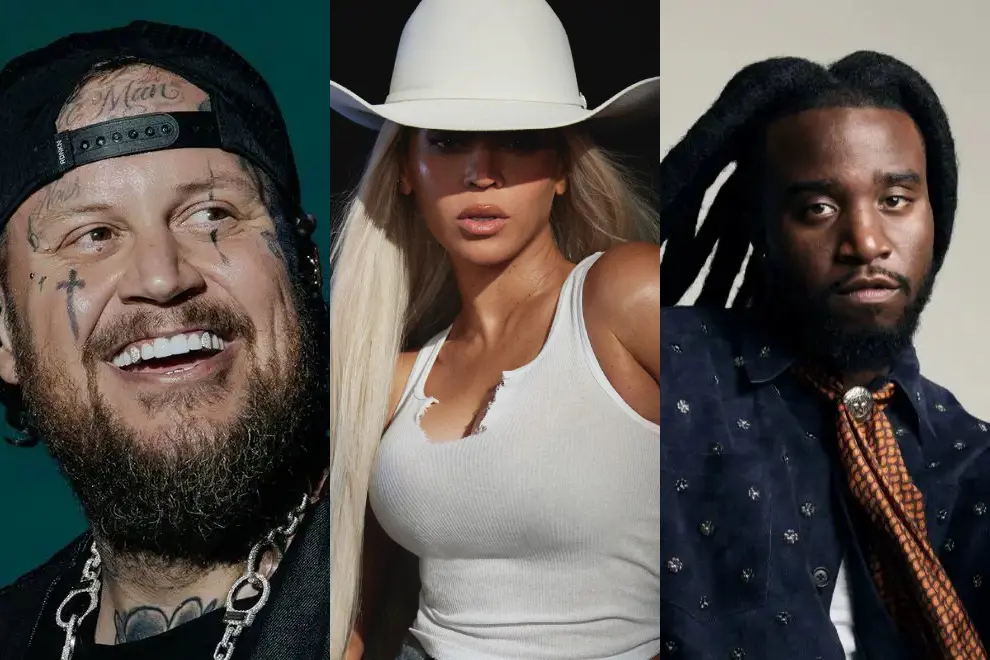
"This ain't a Country album," the Houstonian insisted in an Instagram post. "This is a 'Beyoncé' album." Very Millie Jackson. Regardless, Knowles platformed Black country artists from varying generations – among them the trailblazing Linda Martell and newcomer Shaboozey. Reportedly, country listenership on Spotify exploded.
If country rap has a superstar today, it could be one of a few contenders, the movement multiracial and global. A Nigerian-American from Woodbridge, Virginia, Shaboozey began as a trapper but, pivoting to country rap, blew up with his hoedown A Bar Song (Tipsy), sampling the one-hit wonder J-Kwon's 2000s Tipsy.
It topped Billboard's Hot Country Songs and Hot 100 and, in Australia, reached #1 on the ARIA Top 50 Singles chart. Shaboozey was hailed as a country sensation with his album Where I've Been, Isn't Where I'm Going. He received a swathe of award nominations, including for the 'Best New Artist' Grammy.
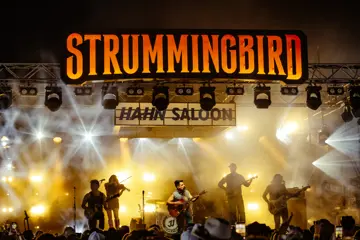
In 2025, Shaboozey toured Australia, billed on the fledgling (and sold-out!) Strummingbird and supporting his Amen collaborator Jelly Roll. He's currently promoting The Outlaw Cherie Lee & Other Western Tales – the teaser single Born To Die a rousing anthem with fiddle, existential lyrics aside.
Bigger again is the genre-busting Post Malone. The Texan-bred rapper/singer, who cites Bob Dylan as a formative influence, broke through with 2015's cloud rap White Iverson, going on to be an industry juggernaut – his historic Sunflower with Swae Lee certified double-diamond.
But, following features on Knowles' COWBOY CARTER and Taylor Swift's THE TORTURED POETS DEPARTMENT, Malone discharged the blockbuster country album F-1 Trillion – Tennessee megastar Morgan Wallen gracing the single I Had Some Help.
Malone even secured the much-loved Dolly Parton to guest. He'll continue in that vein with his upcoming double-LP The Eternal Buzz. Meanwhile, Malone – who this year headlined Stagecoach – is bringing The BIG ASS World Tour to Australia, showing his duality by playing stadiums and Strummingbird 2026.
"Postie" has championed Jelly Roll, another candidate. The Nashville native experienced drug addiction and incarceration before launching his career as an indie rapper in the 2000s. But, leaning into country from the early 2020s, the crooner encountered fame with Son Of A Sinner – #1 on country radio.
Presenting 2023's Whitsitt Chapel, Jelly Roll won 'New Artist Of The Year' at the CMAs. Eminem sampled his old Save Me for Somebody Save Me off The Death Of Slim Shady (Coup De Grâce). Last February, Jelly Roll scooped a stack of Grammys, most notably 'Best Contemporary Country Album' for 2024's Beautifully Broken. The next month, he was inducted into The Grand Ole Opry, at the invitation of Craig Morgan, having initially showcased there in 2021.
In 2026, country rap has a diverse audience worldwide – and it's virtually an industry in itself. And, for all the controversies about how to define the phenomenon, one thing can't be disputed: country rap is neither a mere fad nor 'era' but here to stay. As Jackson might say, "Anybody that don't like country rap…"