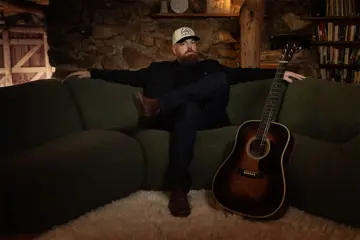
 Ryan Coleman Profile
There’s a moment during our conversation with Ryan Coleman where he casually says something that immediately puts his entire career into perspective.
“Yeah, it’s tough honestly,” he admits. “There's a lot of juggling. I say I have three full time jobs.”
Three, full time jobs.
Not in the “I’m busy all the time” sense people usually talk about. Actual jobs.
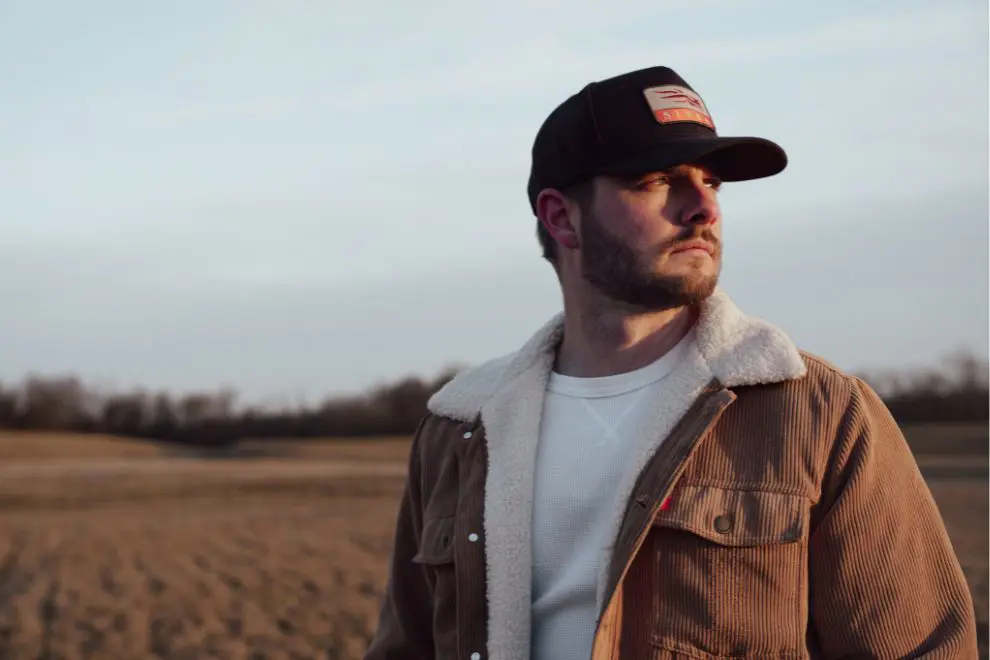
Coleman still works full-time in corporate America while trying to build his music career. Every afternoon after work, he heads to his family’s farm in Eastern Pennsylvania - which is several hundred acres mind you - to help his brothers and dad. Then on weekends, he tours and plays shows.
“Music is the one I prioritise and I really want to make that a full go, but I still do work in corporate America. So I still do have a full time job which probably not a lot of people know,” he says. “But as we're kind of making the transition here, you know, it makes sense for me, and then every day after work I go to the farm. So I’m helping my brothers and my dad and all these guys over there after work. And we tour on the weekends and we just make it work, you know. When you want something real bad you just make it happen.”
It’s the kind of workload that would flatten most people, but Coleman’s upbringing probably prepared him better than most.
Long before television appearances, streaming success or Nashville writing sessions, his childhood revolved around Pennsylvania farm life and 4-H livestock clubs - something he still speaks about with genuine passion.
“It's honestly a great experience,” he says. “I think anybody in the younger generation, it would be beneficial for them to, to learn about it, maybe even join the club.”
For Coleman, those experiences shaped far more than just his understanding of agriculture. It taught him the kind of discipline and responsibility that still carries through into his adult life.
“It honestly teaches you a lot of life skills, you know, communicating and networking with other people, but also how to take care of an animal and that ultimately leads to other things in life, like kids and pets and all that kind of stuff. So it is, it’s a great experience.”
Naturally, that lifestyle also pushed him toward rodeo culture.
“A little, I dabbled,” he laughs when asked about his time competing on the amateur rodeo circuit.
Coleman started in team roping before eventually moving into bull riding during college - something he kept hidden from his family for as long as possible.
“I always wanted to be a bull rider. I mean I’ve wanted to be in the rodeo since I was a baby,” he says. “And thankfully I was able to get that chance in high school. But I started riding bulls when I was in college and I didn’t really tell anybody about it because I knew they wouldn’t be happy about it.”
And sure enough eventually, his brothers found out.
“Once my brothers found out, I think they’re the ones who told my mum and she just…” he laughs. “It wasn’t going to happen anymore.”
Music entered his life just as early. Coleman grew up playing in church and performing casually for friends through the 4-H community, although confidence didn’t come immediately.
“For a while there I didn’t like performing in front of people because I had this weird thing in my head that I felt like they had to tell me I was good,” he says.
That slowly changed once he realised audiences were genuinely connecting with what he was doing.
After college, Coleman moved to Florida during COVID after accepting a corporate job - a decision that unexpectedly helped launch his music career.
“[Florida’s] actually a great area for musicians because you have a lot of amusement parks and there's a lot of bars, live music down there,” he says. “I was playing, for a while there I was playing five, six nights a week after work. So it’s definitely a grind.”
That grind eventually led him onto Season 25 of The Voice, an experience he says completely changed his understanding of performing.
“It really gave me some singing chops that I didn’t have necessarily beforehand,” he explains. “Got to work with some incredible vocal coaches which again I never warmed up for a show. I always just got up there and sang and later come to find out that’s really not good for your vocal cords.”
Beyond the technical side, it also taught him how different performing for television really is.
“It teaches you how to move on stage and perform in front of the camera which is arguably harder to do than in front of people in my experience.”
But perhaps the most surprising part of reality television was adjusting to normal life again afterwards.
“For me it was easy because I have the farm and I have a job and I have my brothers who always keep me grounded.” he laughs.
Not long after The Voice, Coleman released Simple Soul, a song that felt like a direct reflection of his upbringing and lifestyle.
“It just felt like a song that described me and my lifestyle and my upbringing,” he says. “Something that people could relate to about, you know, working 80 hours a week, and that kind of thing and pay check to pay check or whatever it may be.”
And it’s that authenticity that has become one of the defining features of his music.
Songs like A Time or Two, which charted on the Music Row Breakout Charts as an independent release and helped introduce him to a growing audience searching for modern country music that still feels grounded in traditional storytelling.
“It’s more of that 90s style old country music, dancing on a hardwood floor kind of style which I really, really like and that’s kind of how I was brought up.”
Musically, Coleman pulls inspiration from a mix of classic and modern influences, citing artists like John Mayer, George Strait, Merle Haggard, David Allan Coe and Cody Johnson as key artists who helped shape both his songwriting and evolving country sound.
Australian listeners may have recently discovered Coleman through his cover of Wade Forster’s track Strange, with Coleman instantly connecting to Forster’s rodeo-heavy country style.
“I really love his music and his style and the kind of flare he puts on it,” he says. “He’s, you know, Australian and western to the core and I just, I get that.”
Now, Coleman is entering another chapter with latest single 4 Door Ford, a nostalgic track inspired by the first vehicle he bought as a teenager.
“This truck we're talking about is the first vehicle I bought when I was 16,” he says. “And all the memories that you make in it, all the freedoms you get at that point in your life, you know, driving around with your friends.”
For Coleman, songwriting is less about chasing trends and more about trying to preserve feelings and memories people recognise in themselves. “Trying to encapsulate that feeling of nostalgia into a song that people can listen to while they have the windows down, on a Sunday, something like that.”
And while he admits he’s still discovering exactly who he is creatively, he sounds completely comfortable in the middle of the process.
“I think it takes hundreds of songs to really kind of dial in who you are and what kind of sound you're going for,” he says. “But that’s the best part of this whole process is kind of that grind and just finding yourself.”
Fortunately for fans, there’s plenty more coming.
“We do have a couple more songs coming out this year,” he reveals. “And then I’ll let you in on a little secret. We're going to have an EP coming out later this year with some new songs on it for everybody.”
For now, Ryan Coleman is still balancing corporate work, farm life and country music all at once. But if his recent momentum is anything to go by, that balancing act might not last forever.