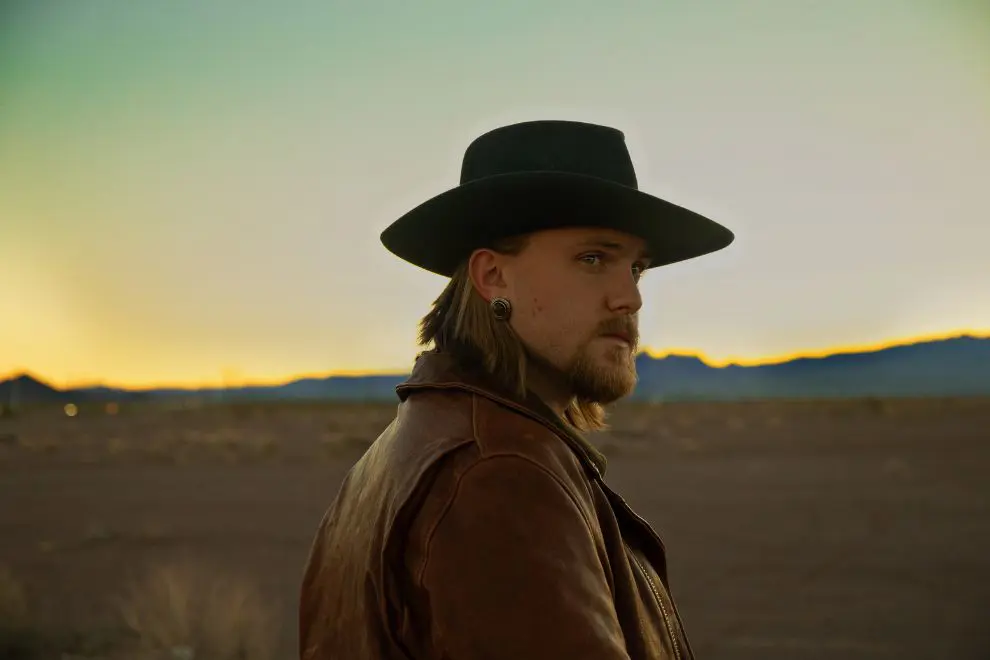
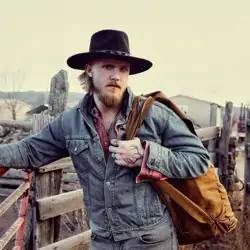
 Jackson Dean Profile
When Jackson Dean dropped Make a Liar last year, it felt like a shift was coming - even if we didn’t fully know what that shift looked like yet. There were hints in the rollout, moments across tracks like Be Your Man that suggested something softer, more grounded, maybe even… dare I say it, a little romantic.
Turns out, that read wasn’t wrong.
“You called it. You called it. It was coming. It was coming the whole time,” Dean laughs, reflecting on that early “soft lover boy era” prediction.
Now, with his third studio album Magnolia Sage officially out in the world, that evolution has fully landed and it’s not just a sonic pivot, it’s a life one too. The record feels like a genuine snapshot of where he’s at right now, it comes across more settled, more self-aware, and fully leaning into the good stuff without overcomplicating it.
“Absolutely. As artists, I think you’re supposed to be singing and playing about what you’re living, you know?” he says. “And when we went to start putting together this third project here, we were like, man, we really want to try some new territory.”
That “new territory” isn’t just creative - it’s personal. Over the past year, Dean’s life has shifted in a way that naturally seeps into the music.
“I myself in my own life am in new territory, you know? I have a woman and a cabin and a dog now, and one of the coolest jobs on planet Earth, and I’m not too sure what else I can ask for reasonably, you know what I mean?” he says. “I got everything I really ever dreamed of in the palm of my hand.”
That sense of contentment is the backbone of Magnolia Sage, but it’s not all smooth sailing. There’s still that push and pull that comes with life on the road and it’s reflected in this record.
“So this record is about the value of that, but there’s also pining songs and getting-home songs, which is, you know, the part where I’m a thousand miles away at any given time,” he explains. “On the road and all that, which I love. But this project is really, you know, it’s for the muses.”
Writing for “the muses” is what gives the album its universality. Even though it’s deeply personal, it doesn’t feel exclusive.
“It’s so when someone listens to it they can see their own muse inside in their head, see their own life in that song. Like, it’s stepping into the shoes of the song.”
For Dean, this project also marks a shift in how he approaches songwriting. While his earlier records leaned into bigger, heavier themes, Magnolia Sage feels more stripped back in its delivery - less about dramatics and more about honesty.
“I think that I tried to do that in a what-was-in-here standpoint on the last two records, what was in my heart, you know? In a big and epic way,” he says. “But this is a little bit more of just saying it.”
That simplicity hits hardest in moments like Something Easy, a track that quietly captures the heart of the album.
“It’s just like some of my favourite lyrics I’ve sang,” he says. “Everybody tends to love the same, you know, the same way when it’s true and pure and right.”
Interestingly, Something Easy wasn’t originally written with this album in mind, it just found its place once life caught up with it.
“That one really, in my opinion, encapsulates the whole gist of the record,” Dean says. “It was also funny, that was written before all the rest. I had that song and it never really fit on anything that we were up to at that moment, and I just held it close to my vest… but like when she got here I was like, oh, I literally have this right now.”
It’s that kind of full circle moment that defines Magnolia Sage - songs written at different times, all eventually aligning into something that feels cohesive and intentional. Even the album’s title reflects that duality, balancing softer, more soulful moments with a wider, more cinematic Western edge.
“It wasn’t until after the fact that I wanted to have everything and then be like, how do I thread the needle?” Dean says. “I want it to be like this, you know?”
Rather than starting with a strict concept, he let the songs lead, then shaped the narrative around them.
“How you thread the needle and, you know, show the story and show the path that you’re trying to take people down?” he says. “It was always a challenge.”
The result is an album that feels expansive without losing its centre. One minute it’s intimate and reflective, the next it’s wide open and cinematic.
“There’s some stuff in here that sounds like standards from the '40s, and then there’s some stuff in here that’s like you’re riding west, like you are going towards the sunset,” he says. “And then there’s stuff that’s like, oh, but we could be rolling down the Mississippi right now as well.”
That sense of place is no accident. Dean sees songwriting as a way of painting pictures, of pulling listeners into a moment and letting them live in it.
“Sometimes, like, we’re artists, we’re supposed to be painting landscapes with music and words,” he says, pointing to influences like Howlin' Wolf as a reference point for that kind of storytelling.
With three albums now under his belt, Dean is also facing a new kind of challenge, figuring out how to bring it all to the stage.
“It’s getting really hard. It’s getting really hard. It’s like choosing between children, but there’s like 30 of them,” he laughs. “We have so much stuff that we want to play and so much that we can’t afford to play.”
Still, the live show is evolving alongside the music, with a set that reflects both the high energy moments and the more stripped back direction of the new record.
“Our show this year has evolved so much… it’s really hype and it’s a really beautiful set and it’s really a lot of fun.”
And while the album as a whole feels cohesive, there are still moments designed to catch listeners off guard. One standout, according to Dean, is Dust on a Dirt Road.
“‘Dust on a Dirt Road’ is unlike anything that I have in my entire discography,” he says. “From the phrasing to the Western trap beat… I’ve never… it’s so different from anything that I’ve got… and like, I think we killed it.”
At its core, Magnolia Sage isn’t about reinvention, it’s about alignment. It’s about an artist hitting a point where life and music finally match up, where the songs reflect not just where they’ve been, but where they are right now.
And for Jackson Dean, that place feels pretty damn solid.